
Coaches Trailside Webinar: Hosted by Competitive Cyclist
Watch the recording of our last webinar, focused on trailside repairs, such as the essentials to carry on a day-to-day […]

Ask a group of NICA coaches what GRiT is, and you’ll probably hear a familiar list: girls’ rides, GRiT Give it a Go events, league programs, recruiting more girls, or crafts at the GRiT tent during race weekends. All of those things can be part of GRiT, and they can be really valuable, but they are not the whole picture.
Photo credit: Adam Haynes
That includes student-athletes, coaches, volunteers, league staff, team leaders, alumni, parents, and future participants who have not found their way to NICA yet. GRiT is not only for girls who choose to attend a specific GRiT activity, and it is not something teams or leagues opt into or out of. It is part of how NICA builds a healthier, more welcoming, more sustainable community for everyone.
That matters because mountain biking has not always felt welcoming to girls and women. Many of us have felt the effects of “bro culture,” even when no one set out to exclude anyone. It can show up as being underestimated, talked over, given less space, assumed to be less skilled, or treated like we are there to support the real riders instead of being riders, coaches, decision-makers, and leaders ourselves. Sometimes it is obvious, but often it is quieter: a small comment, a joke, a pattern of who gets listened to, who gets interrupted, who gets invited into leadership, or who is expected to do the behind-the-scenes work.
GRiT asks teams and leagues to pay attention to those patterns and to change them on purpose. Culture is not only built through big statements or special events; it is built in the everyday ways people are noticed, respected, included, and trusted. Who gets greeted when they arrive? Who gets encouraged? Who is quietly hanging back? Who is being invited to lead? Who is always asked to organize the snacks, and who is asked to make decisions? These moments shape whether girls and women feel like full members of the NICA community or like guests in someone else’s sport.
This is also where male allies matter. Many team directors and head coaches are men who care deeply about making NICA better for girls and women, and that support is important. But allyship cannot stop at encouragement from the role someone already holds. Sometimes it means making room. Sometimes it means asking, “Am I the right person to keep leading this, or is it time to mentor, support, and step aside so a woman can move into this role?” Creating space for female leadership is not a loss for a team. It is one of the clearest signs that a team is growing stronger.
The good news is that many men in NICA already want to be part of this work, and that matters. Some of the most powerful change will come from male coaches and leaders who are willing to use their influence thoughtfully: noticing who is not being heard, inviting women into decision-making spaces, recommending female coaches for leadership roles, redirecting dismissive comments, and being willing to have the awkward conversation when team culture is not living up to NICA’s values. This does not require perfection. It requires attention, humility, and a willingness to act before a woman has to be the one to point out the problem. Good male allies can help shift the room, not by speaking for girls and women, but by making sure girls and women have the space, support, and authority to speak and lead for themselves.
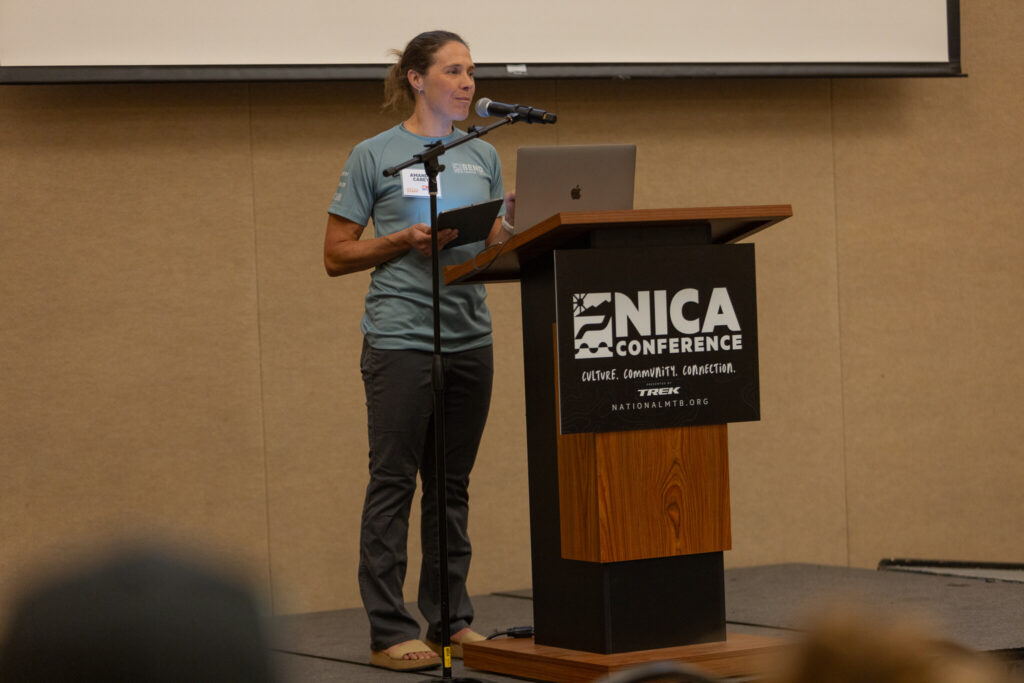
NICA President Amanda Carey speaks at 2026 NICA National Conference
When we understand GRiT as culture work, the conversation changes. Instead of only asking how to get more girls to show up, we also ask what kind of environment we are inviting them into. Instead of measuring success only by attendance at a single event, we pay attention to whether girls return, stay involved, build confidence, bring friends, and see leadership as something available to them. Recruitment matters, but staying matters too.
That goal will not happen because we hope girls find us. It will happen because teams and leagues choose to do things differently: naming GRiT coach leads, hosting girls-only GRiT Give it a Go events, inviting more female coaches, supporting women in leadership, following up with new riders, and noticing the small moments where girls decide whether this sport feels like a place for them.
GRiT Give it a Go events are one practical way to bring this culture to life. These events give girls a low-pressure first experience with mountain biking, NICA coaches, and team community, with the goal of connection, confidence, and belonging rather than skill mastery. A strong event helps a girl leave knowing that someone knows her name, that she had a moment of success, and that there is a clear way to come back.
But the event is a doorway, not the whole house. The real work continues at practice, at races, in coach meetings, in leadership decisions, and in the everyday choices that shape team culture. GRiT is not only about getting more girls to the start line. It is about making sure that when they arrive, they are not underestimated, overlooked, or treated like visitors in mountain biking. It is about building a NICA where girls and women know they belong, know they can lead, and know the community is better because they are here.
If GRiT is culture work, then every team and league has a role to play. Here are a few places to start:
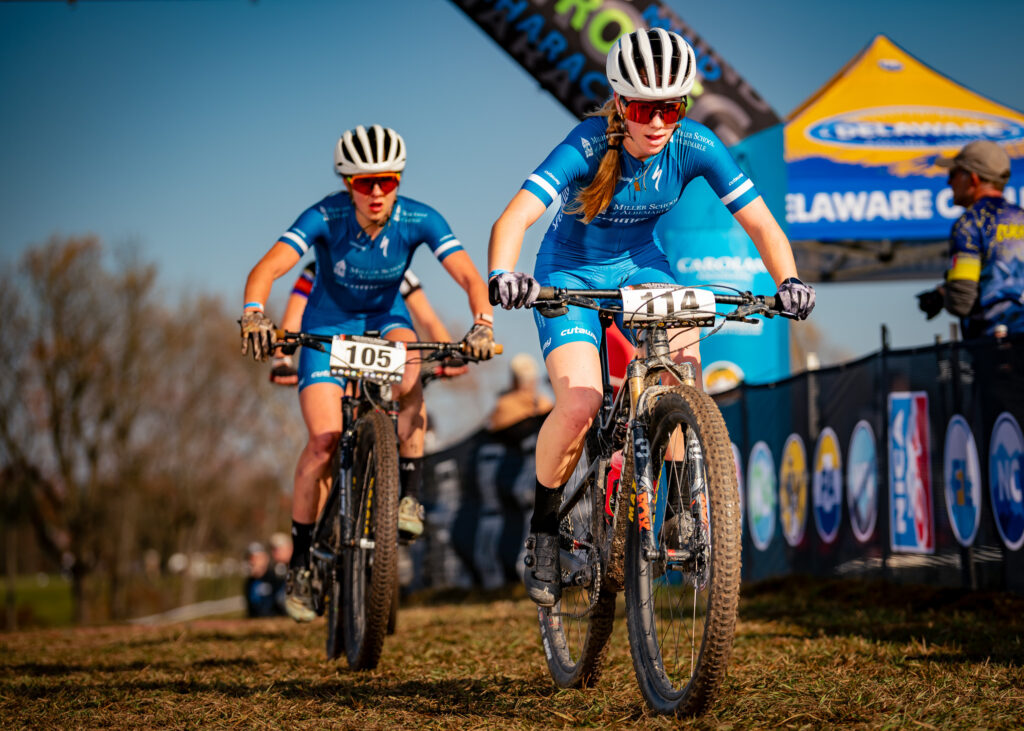
Photo credit: Aaron Puttcamp
This content was authored by NICA’s coach education team. NICA’s comprehensive coach education program provides new and existing coaches with the high-quality training and resources they need to be confident, competent, and empowered leaders on their youth mountain bike teams. NICA coaches not only create amazing experiences for student-athletes, they create a foundation for building healthy mountain bike communities. NICA coaches change lives!
COACH EDUCATION | PIT ZONE LOGIN | COACH REQUIREMENTS | COACH HELP DESK
NICA partners help kids gain access to a thriving and engaged cycling community.

NICA partners help kids gain access to a thriving and engaged cycling community.
Watch the recording of our last webinar, focused on trailside repairs, such as the essentials to carry on a day-to-day […]

When winning starts to feel like an expectation, the joy of racing can turn into pressure. Here’s how coaches can […]

Stop answering the same parent questions over and over. A Team Family Guidebook gives families one easy place to find […]

In this month’s The Trailhead article, we look at the power of visible female leadership and coaches from diverse backgrounds, […]