
Coaches Trailside Webinar: Hosted by Competitive Cyclist
Watch the recording of our last webinar, focused on trailside repairs, such as the essentials to carry on a day-to-day […]

Every head coach and team director eventually steps away. Sometimes it’s because their kids graduate. Sometimes work gets busier. Sometimes it’s simply the right time for someone else to lead. Whatever the reason, every team will eventually face the same question: Who’s next?
Photo by Adam Haynes
The strongest teams aren’t built around one great head coach. They’re built by leaders who intentionally develop the people who will one day take their place. When we invest in future leaders long before we need them, we create teams that continue to thrive for years to come. Too often, though, we look around when it’s time to hand over the reins and realize there isn’t an obvious successor. Or perhaps there is, but we’ve overlooked them.
I think that’s especially true when it comes to women and other coaches from underrepresented backgrounds.
We have incredible coaches serving our teams, and many of those coaches come from groups that are typically underrepresented in mountain biking. But when it’s time to appoint the next head coach or team director, too often the conversation naturally turns toward another person who looks remarkably similar to the person currently leading the team. This isn’t because people are intentionally excluding anyone. Most of the time, we simply promote the people who look most like the leaders we’ve always had.
Research calls this affinity bias – our tendency to recognize leadership potential more readily in people who remind us of ourselves or the leaders we’ve worked with before. It’s an unconscious bias that affects workplaces, volunteer organizations, and sports teams alike. Unless we intentionally stop to question it, we can keep recreating the same leadership structure, even while surrounded by talented people with different experiences, perspectives, and leadership styles.
This isn’t an argument that men shouldn’t lead teams. Some of the most influential coaches in my own life have been men, and every day I work alongside male coaches who are changing young people’s lives for the better. It’s an argument that every team is stronger when leadership reflects the community we’re trying to build.
As an example, we know that girls are more likely to participate in sport, remain involved, and see themselves as leaders when they have female role models. Seeing women in those leadership positions increases girls’ sense of belonging, confidence, and self-efficacy, while helping them imagine themselves in those same roles one day. We see the same pattern when it comes to race and ethnicity. Research suggests that young people from historically underrepresented racial and ethnic backgrounds benefit from seeing leaders who share aspects of their lived experience and understand their cultural context. Representation helps young people imagine themselves as belonging, not just as participants, but as future leaders. At the same time, diverse leadership benefits every student-athlete by broadening their understanding of who belongs, who leads, and what leadership looks like.
When we look at who holds leadership roles on our teams, we can have several female coaches on staff while practices, major decisions, and key leadership positions are still primarily led by men. The same can be true for coaches from other underrepresented backgrounds. Representation isn’t just about having diverse names on a coaching roster. It’s about making sure student-athletes regularly see different people leading practices, making decisions, solving problems, and shaping the culture of the team.
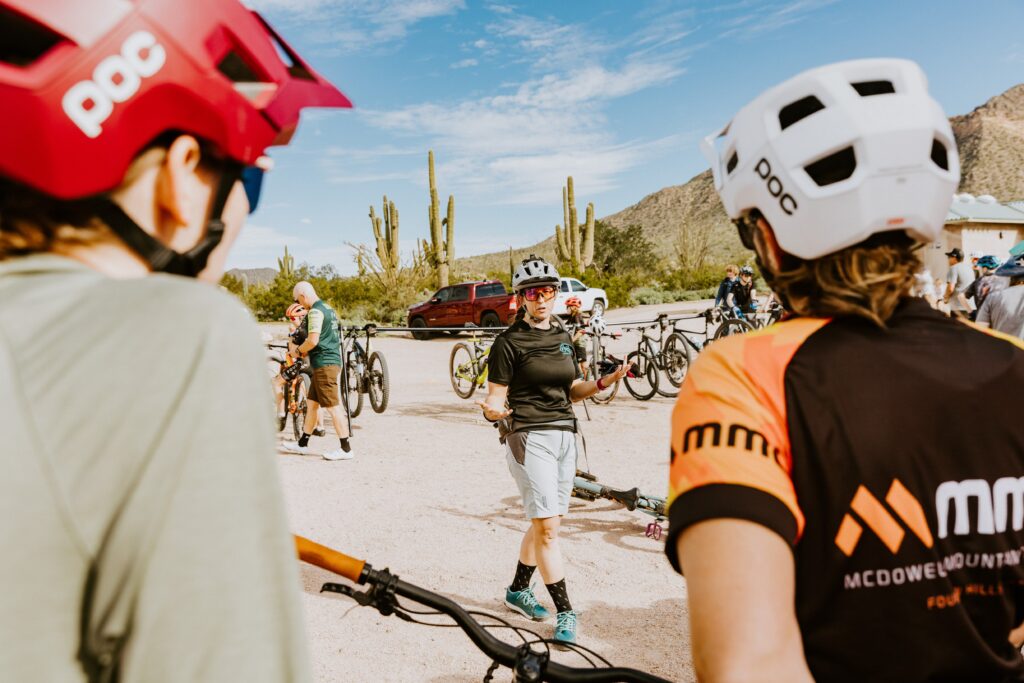
Photo by Sabrina Koogler, Arizona Cycling League
Consider how we respond when someone asks how they can get more involved or what else they can do to support the team. Women might be pointed towards organizing snacks, coordinating registration, leading a GRiT ride, or helping with communication. And we can be great at doing those things, but we can also make exceptional leaders so why not ask:
“Have you ever thought about becoming a level 3 coach?”
“I’d love to mentor you to become our next head coach.”
“I think you’d make an outstanding team director.”
Those conversations can completely change the trajectory of a coach’s journey with NICA. But more importantly, they can start to change team culture, creating an environment where your team slowly starts to attach and retain more kids who are currently underrepresented in mountain biking.
Many women and coaches from underrepresented backgrounds don’t put themselves forward for leadership because nobody has ever suggested they belong there. Research has consistently found that women are less likely to pursue leadership opportunities unless they feel they meet nearly all of the qualifications. Sometimes all it takes is someone they respect saying, “I think you’d be great at this.” That encouragement can be the difference between someone staying in a supporting role and someone becoming the leader who shapes the next generation of coaches.
If you’re a woman or a coach from an underrepresented background reading this article, I’d encourage you to think about where you want your coaching journey to go next. Maybe that means becoming a level 2 or level 3 coach. Maybe it means leading more skills sessions, mentoring newer coaches, or putting your hand up when your team starts talking about succession. You don’t have to know everything before you lead. None of us did.
And if you’re a head coach or team director, I’d encourage you to think carefully about your legacy.
Your legacy won’t just be measured by the number of student-athletes who raced under your leadership or the podiums your team achieved. It will be measured by whether your team continues to thrive long after you’ve stepped away. Who are you intentionally mentoring? Who are you giving opportunities to lead? Who are you inviting into conversations where decisions are made? And perhaps most importantly, who are you overlooking simply because they don’t fit the picture of what a head coach or team director has always looked like?
One day, every head coach or team director will step down. When that day comes, I hope we’ve built teams where leadership doesn’t simply pass from one generation to the next, but grows stronger because we’ve intentionally created opportunities for more people to lead.
Every student-athlete deserves to look at the front of the group and think, “Someone like me belongs there.” And every one of us has the opportunity to make it happen by intentionally mentoring, encouraging, and believing in the next generation of leaders before they believe in themselves.
If you’re a head coach or team director, identify someone on your team who has the potential to lead, especially someone who may not traditionally see themselves represented in mountain biking leadership. Give them opportunities, invite them into decisions, and tell them you see that potential in them.
And if you’re a woman or coach from another background underrepresented in mountain biking, consider where you’d like your own leadership journey to go. Put your hand up. Ask for opportunities. Let your team know you’re interested in growing as a leader. You don’t need to wait for someone else to decide you’re ready.
NICA’s Succession Planning Playbook and Guide can help teams and coaches take those next steps and build smoother, more intentional leadership transitions. Strong succession planning starts long before you need a successor. Log into Pit Zone, click the Education Center LInk button, and search Coach Resources for “succession planning” to download the playbook and worksheet.

This content was authored by NICA’s coach education team. NICA’s comprehensive coach education program provides new and existing coaches with the high-quality training and resources they need to be confident, competent, and empowered leaders on their youth mountain bike teams. NICA coaches not only create amazing experiences for student-athletes, they create a foundation for building healthy mountain bike communities. NICA coaches change lives!
COACH EDUCATION | PIT ZONE LOGIN | COACH REQUIREMENTS | COACH HELP DESK
NICA partners help kids gain access to a thriving and engaged cycling community.

Watch the recording of our last webinar, focused on trailside repairs, such as the essentials to carry on a day-to-day […]

When winning starts to feel like an expectation, the joy of racing can turn into pressure. Here’s how coaches can […]

Stop answering the same parent questions over and over. A Team Family Guidebook gives families one easy place to find […]

In this month’s The Trailhead article, we look at the power of visible female leadership and coaches from diverse backgrounds, […]