
Coach game night: A winning way to build culture from the top
Preseason is the perfect time to get coaches together and begin building camaraderie, team culture, instruction skills, and a focus […]

This is the second article of a two-part series on creating and using practice plans with NICA teams. Following up on a piece about plan benefits and roles, this installment delves into what to include when creating your own.
You show up to your team practice. Student-athletes stand alongside their bikes in anticipation. Some have shown up hoping to learn new skills. Some seek a podium spot later in the season. Most want to have fun with their friends and teammates. All are looking to you to help make that happen.
What’s your plan? Is it designed to meet the needs of your team? Is it missing anything?
The previous Crafting Practice Plans article discusses why plans are beneficial and who’s responsible for making them successful (SPOILER ALERT: It’s the whole team!). This article provides the building blocks for practice plans that leave little out and can make practices more fun, more efficient, and more effective.
One of the very best ways to take a practice from good to great is to be intentional with your plans. Identify clear, specific objectives for each practice. Then, structure your plan to support those objectives, being deliberate with every part of practice. Every activity should move you toward meeting one or more of your day’s goals.
Now, that doesn’t mean spending the whole two hours doing skill drills. There are other ways to work towards goals, like applying learned skills to games and trail rides, building team culture and interpersonal connections through off-the-bike activities, and using reflection time to internalize it all.
TIP: Use NICA’s OTB manuals and game guides to gather a pool of potential activities that you can plug into practice plans to meet relevant objectives.
Know what you want to achieve, then practice with the intention of doing so.
Yes, variety is the spice of life. Some consistency and repetition are good, however. If variety is the selection of fillings you can put in your burrito, consistency is the big soft tortilla that holds everything together and differentiates it from a rice bowl or a taco pizza.
Use recognizable and consistent names for skills, activities, methods of instruction, etc. This helps prevent confusion and lessens the need to explain things in detail over and over again. For example, you can instruct coaches to teach cornering by having athletes start out with their pedals level, weight centered, knees and elbows bent, fingers on the brakes, and eyes looking forward. Alternatively, if you’ve been using consistent language, you can just say, “have athletes start in ready position.”
Define early on things like the elements of an ABCDE bike check, what a “skills runway” should look like, and what the 3 Essentials are. Then you won’t have to spell them out in detail in every practice plan. Stick with the language in your OTB manuals, and you can communicate consistently from coach to coach and group to group, even if you have an athlete or coach transfer from another NICA team.
Design your practice plans with similar flow from one session to another. Will you gather in small groups or as a whole team at the beginning of practice? Will you always put bike checks first thing or after announcements? Will you have reflection time before you wrap up? If athletes and coaches know what to expect, there’s less need for explanation. There’s less scrambling and setup time between activities. Practices become more efficient, and it cuts down on distracting behavior or acting out that can happen when things aren’t kept moving.
Reinforce team culture with consistent rituals, too. You can put fist bumps at the end of every practice, team circles after every race weekend, a team constitution activity every season, and so on. These routines enhance what it means to be a part of your team.
There are all sorts of ways to spend time on bikes during practice, and each allows your athletes to work toward goals in different ways. By mixing methods, you take advantage of the unique benefits of each, do a better job of meeting the needs of all your athletes, and keep practices fresh and fun. That’s why most practice plans should include skills instruction and drills, on-the-bike games, and trail or short track rides.
Skills instruction is key in teaching specific techniques, especially when delivered in the Tell, Show, Do, Review OTB style. Then taking those skills and including them in drills allows for specific focus and concentration on mastering them.
On-the-bike games are fantastic for illustrating if a skill has truly been learned. Games let athletes put techniques to use and help coaches evaluate strengths and weaknesses. Plus, they add socialization and fun to your practices. Large-group games allow the entire team to interact with each other, too, which can be tough to do with skill or ride activities.
For most athletes and coaches, the whole reason behind learning skills is to take them out on the trails and ride! Here’s your team’s opportunity to fully develop as riders, becoming fitter and more confident. If your venue allows, be sure to include riding in almost every practice plan. Make it a short-track ride if it’s early in the season and groups haven’t learned the basic skills to ride the trails safely yet.
With each type of activity, shoot for a balance of challenge and play. Include activities that allow for athletes to push their limits and get outside their comfort zone — this is where growth occurs. However, build in recovery time and relaxed activity, too — this isn’t boot camp.
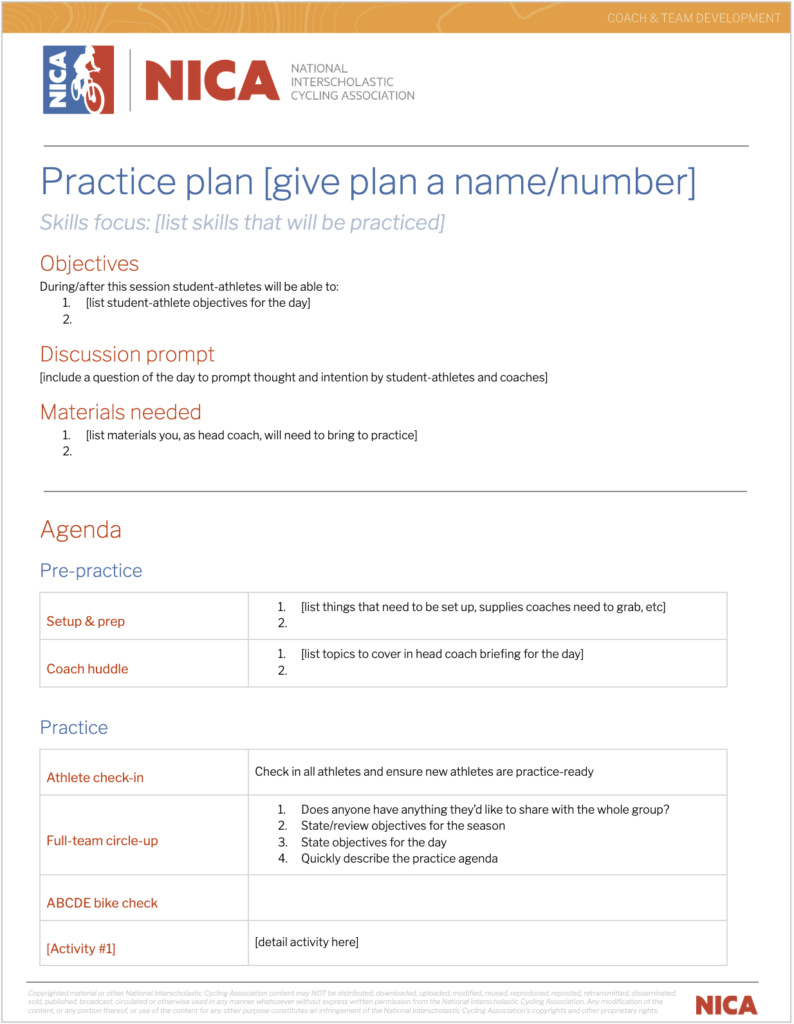
Outside of the actual bike activities built into a practice plan, it’s helpful to list many of the other details that support effective, efficient practices. Let your coaches know what’s expected from them, remind yourself what you need to provide, and keep track of timing.
Think about what you would like your practices to include. If it’s important and you want it to happen, write it down.
Having a plan is awesome, but be ready to adjust as needed. Like bike-body separation, being a little loose with your practice plans keeps minor bumps and curves from ruining the flow.
Check in regularly with your athletes. Some learn differently than others. An activity that went great last season might not mesh with this year’s team. Check in regularly and watch for signs of frustration or boredom and change your approach. Maybe let the athletes adjust the rules of the game or choose the ride route, as long as it’s kept relevant to the activity’s goals.
Coaches will appreciate flexibility, too. A good balance of practice guidance and free rein allows them to apply their own methods and tactics when working with athletes. Allow coaches to be creative when implementing practice plans. It’s hard to keep things fun when accounting for every single minute of practice.
For some practice sessions, feel free to throw the typical plan format out the window, too. Instead of doing the usual mix of instruction, games, and rides on your home trails, devote full practices to time trials, bike orienteering, trail work, or friendly races with nearby teams.
Finally, take time for your own reflection. Following each practice, think about how the session went. What was good? What could be improved? Let those thoughts guide your future practice plans.
For help take a look at these practice planning resources in the NICA Education Center:
This content was authored by NICA’s coach education team. NICA’s comprehensive coach education program provides new and existing coaches with the high-quality training and resources they need to be confident, competent, and empowered leaders on their youth mountain bike teams. NICA coaches not only create amazing experiences for student-athletes, they create a foundation for building healthy mountain bike communities. NICA coaches change lives!
COACH EDUCATION | PIT ZONE LOGIN | COACH REQUIREMENTS | COACH HELP DESK
NICA partners help kids gain access to a thriving and engaged cycling community.

NICA partners help kids gain access to a thriving and engaged cycling community.
Preseason is the perfect time to get coaches together and begin building camaraderie, team culture, instruction skills, and a focus […]

Looking for a simple way to welcome new riders to your team this season? Try It Out events are now […]

Inspired by a fast-paced rodeo event, the flag racing game tests student-athletes’ timing and coordination as they race to place […]

Ever noticed that quiet pause? You see it in a rider who lingers, maybe breathing just a bit harder than […]